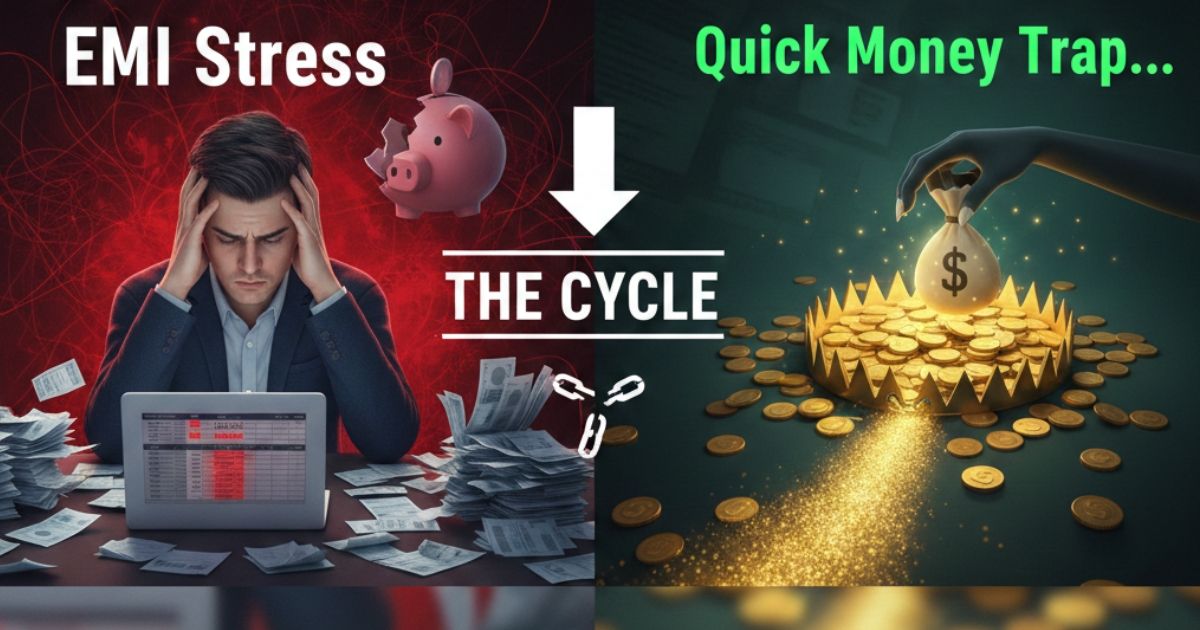
Monthly EMI dates can create significant anxiety. As the due date approaches, stress begins to build. Reminder messages, notifications, and phone calls make the pressure feel constant rather than occasional. For many individuals, EMI stress becomes a recurring mental burden instead of a once-a-month responsibility.
When money feels tight, quick solutions start looking attractive. In that moment, they appear to reduce stress. However, most “quick money” options solve today’s problem while quietly creating a larger one for tomorrow. More EMIs, higher interest, and added financial pressure soon follow.
In this blog, you’ll understand what the quick money trap really is, why people fall into it so easily, and practical steps to escape it without worsening your financial situation. The goal is to reduce stress—not multiply it.
Understanding the Quick Money Trap
The quick money trap begins when panic replaces planning. An EMI date is near, cash is limited, and stress is high. In that moment, any fast solution feels tempting.
People turn to short-term loans, instant loan apps, repeated credit card usage, or borrowing without a clear repayment plan. At first, it brings relief, but only temporarily.
The problem does not disappear; it simply shifts forward. Interest increases, debt grows, and new due dates arrive quickly. Soon, the same stress returns often stronger than before.
What started as a small financial gap turns into a cycle of mounting pressure. Recognizing this pattern is the first step toward breaking it.
How to Escape from the Quick Money Trap
Escaping the quick money trap requires slowing down your decisions and choosing safer alternatives. The following steps can help:
1. Borrowing From Family
Borrowing from family can feel uncomfortable, but it is often safer than taking high-interest quick loans. Family support typically comes without excessive interest, strict deadlines, or aggressive recovery pressure.
There is usually more understanding if you need additional time to repay. This reduces emotional stress during already difficult moments.
If you choose this option:
● Be honest about your situation.
● Borrow only what is absolutely necessary.
● Agree on a simple repayment plan.
● Repay responsibly and on time.
While it may feel awkward, this option can prevent long-term debt complications.
2. File a Harassment Complaint if Needed
EMI stress often intensifies due to recovery pressure. Constant calls and messages may push individuals to take quick loans simply to stop the harassment.
However, recovery agents cannot:
● Threaten you
● Use abusive language
● Call at odd hours
● Contact your family or employer without due process
If harassment crosses legal limits:
● Save call logs and messages.
● Communicate in writing for documentation.
● Use official complaint portals or grievance mechanisms.
Filing a complaint does not mean avoiding responsibility. It means protecting yourself from unlawful pressure while working toward a fair resolution.
Tips to Avoid Falling Into the Quick Money Trap Again
Preventing the trap is easier than escaping it. Consider the following:
● List all EMIs clearly.
● Identify which liabilities are most urgent.
● Avoid taking new debt during financial strain.
● Build a small emergency fund gradually.
● Reduce non-essential expenses temporarily.
● Plan repayment realistically instead of emotionally.
EMI stress reduces through consistency and awareness—not shortcuts.
Conclusion
Quick money may feel like relief in the moment, but it often creates bigger problems later. Paying one EMI through a risky shortcut only postpones the stress. Soon, new due dates appear, interest grows, and pressure returns even stronger.
Financial stability is built step by step. Choosing safer alternatives, understanding your legal rights, and planning repayments responsibly reduces long-term stress.
Speed may silence the pressure for a day, but control brings lasting peace.
If you’ve faced EMI stress or experienced the quick money trap, share your thoughts in the comments. Your experience may help someone make a safer financial decision.
Also, read about the signs that show you are falling in debt trap and how to escape it.